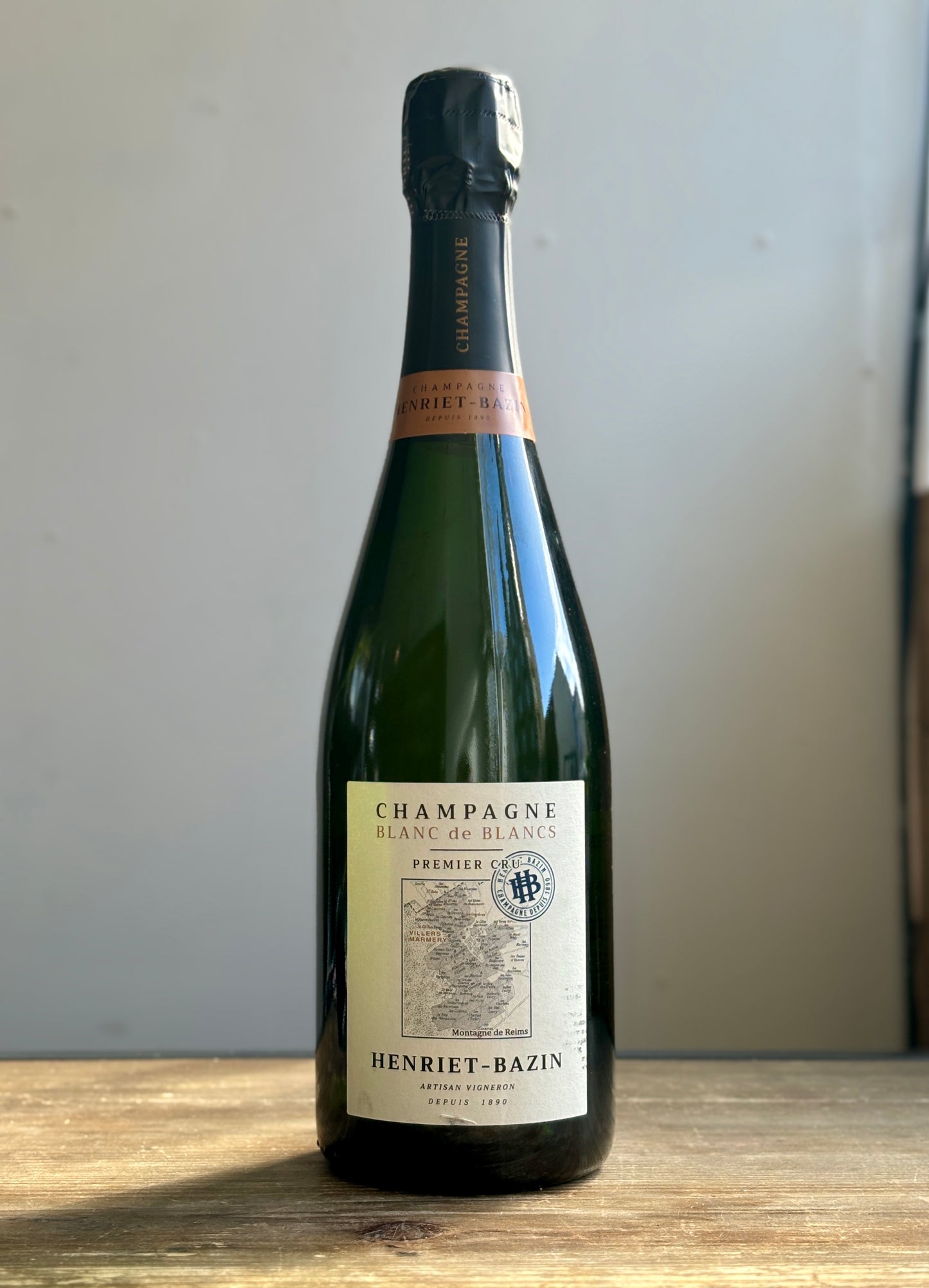
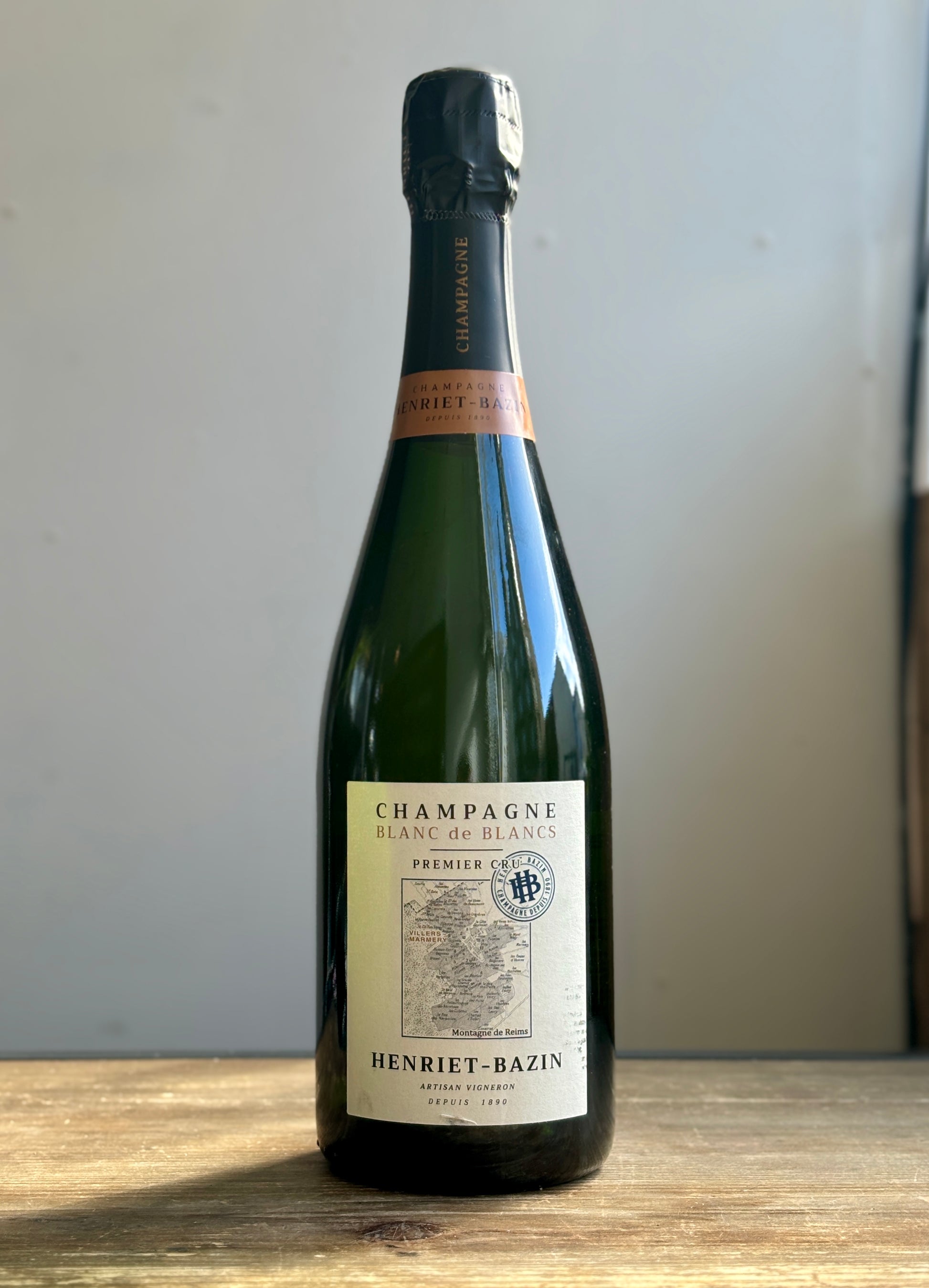
Champagne Henriet-Bazin is a family-run Récoltant-Manipulant based in Villers-Marmery, on the northern slopes of the Montagne de Reims. The family's story begins in 1890, when Gaston Henriet decided to keep part of his grape harvest rather than selling everything to the Champagne houses, and began making his own wine. His son Robert continued the work from 1930, developing a clientele through fairs in Paris, Lille and Lyon. The modern Henriet-Bazin name came about in 1968, when Daniel Henriet married Micheline Bazin, whose family were also winegrowers in Villers-Marmery. Their two family vineyards were brought together, creating the estate that exists today. Marie-Noëlle joined the family business in 1991 and made the important decision to keep the entire harvest for estate vinification rather than selling grapes, establishing Henriet-Bazin firmly as an independent grower Champagne producer.
The domaine currently works around 7.5 hectares across four villages and 36 parcels, giving the family a surprisingly broad range of terroirs for a relatively small estate. The core vineyards are in the Montagne de Reims, particularly Villers-Marmery, Verzy and Verzenay, with an additional 1.75 hectares of Meunier in Faverolles-et-Coëmy. Villers-Marmery is a Premier Cru village where Chardonnay plays an important role, while Verzy and Verzenay are Grand Cru villages particularly associated with Pinot Noir. This mixture of villages, exposures, elevations and soils allows Marie-Noëlle and Nicolas to build wines around individual parcels rather than treating the estate as a single vineyard. Their philosophy is very much centred on allowing these differences to remain visible in the finished Champagne.
The family's approach to the vineyard has become increasingly focused on working with nature rather than trying to control it. Marie-Noëlle and Nicolas began moving beyond the more conventional principles of sustainable viticulture in the early 2000s, abandoning herbicides, encouraging natural grass cover between the vines and sowing plants to replace artificial fertilisers. They also work according to lunar cycles and pay close attention to insects and the wider ecosystem within the vineyard. The aim is not simply to farm without chemicals, but to rebuild living soils and encourage the vine roots to penetrate deeper into the ground. The family believes these changes have altered the character of the grapes themselves, giving them a clearer connection to the individual soils and sites from which they come.
That attention to the vineyard continues in the cellar, where the family takes a deliberately gentle, low-intervention approach. Grapes are harvested by hand once the family considers them fully mature, and the juice moves from the press into the winery entirely by gravity rather than being pumped. The must is allowed to settle naturally for more than 24 hours, meaning filtration is unnecessary at this stage. After alcoholic fermentation, the wines remain on their lees for around nine months in enamelled tanks, giving the individual parcels time to develop before Marie-Noëlle begins the final blending. The finished Champagnes are then given at least three years ageing on their lees in bottle, while the vintage wines receive more than six years. It is a slow process, but one that fits the estate's belief that the winemaker's job is primarily to give the wine time and avoid getting in its way.
One of the estate's most interesting features is its perpetual reserve system dating back to 1968. Reserve wines from successive years are maintained in a Solera-style system and can form a significant component of certain cuvées, giving the wines an unusual depth and continuity from vintage to vintage. The Gaston & Louise cuvée, for example, is a 50/50 blend of Pinot Noir and Chardonnay from Premier Cru vineyards and contains 30% of this historic reserve wine, before spending nine months on its lees and at least three years ageing in bottle. Elsewhere the range includes a Blanc de Blancs from Villers-Marmery, a Grand Cru Blanc de Noirs from Verzy and Verzenay, a single-parcel Meunier from Faverolles-et-Coëmy and more mature vintage wines such as Arsène and Marie-Amélie. Dosage is generally kept deliberately low, allowing the acidity, chalk and individual vineyard character to remain prominent.
What makes Henriet-Bazin particularly interesting is the combination of old family traditions with a very modern understanding of vineyard health and terroir. This isn't a Champagne house buying grapes from dozens of growers and constructing a consistent house style from them. It is a small grower estate working its own vineyards across a handful of villages, keeping the harvest for its own wines and increasingly vinifying individual parcels separately. The combination of Grand Cru and Premier Cru vineyards, three Champagne varieties, varied exposures and the family's decades-old Solera gives Marie-Noëlle and Nicolas a remarkable amount of material to work with. The result is Champagne with plenty of the freshness and chalky character expected from the Montagne de Reims, but also a sense of texture and individuality that comes from treating the vineyard as the starting point rather than simply the source of grapes.