La Ferme des Confluences is a young, organic wine estate based in Saint-Fiacre-sur-Maine, at the heart of the Muscadet Sèvre-et-Maine appellation in the Loire Valley. The domaine is now led by Thomas Foubert, an agronomist and trained agricultural specialist who grew up on his family's farm in northern France before finding his way into wine. His first experiences in viticulture came in Touraine, where he worked with a number of influential Loire growers, including Damien Delecheneau, Xavier Weisskopf, Frantz Saumon and Stéphane Cossais. He subsequently gained practical experience during harvests at the Ferme des Sept Lunes in Ardèche and Domaine de la Pépière in Muscadet, before arriving at the Saint-Fiacre estate and beginning a new chapter under the name La Ferme des Confluences.
The domaine occupies a particularly interesting position within Muscadet, with vineyards spread across several distinct geological sites. The estate sits on the Armorican Massif, with vineyards on both granodiorite and gneiss. The granodiorite sites around Pont-Caffino, within the Château-Thébaud cru, sit above dramatic cliffs, while the vineyards around Gras Moutons are planted on the gneiss of the Monnières-Saint-Fiacre cru. These different soils give Thomas the opportunity to explore the mineral character of individual parcels rather than treating Muscadet as a single homogeneous terroir. The main grape is Melon de Bourgogne, the traditional variety of Muscadet, but the domaine also works with Folle Blanche, Chardonnay, Côt and Egiodola, allowing the estate to explore both classic Muscadet and less conventional Loire wines.
Thomas's approach begins firmly in the vineyard. The estate is certified organic, with particular emphasis placed on healthy, naturally expressive fruit and maintaining the long-term resilience of the soils. The vines are worked using Guyot Poussard pruning and careful debudding, while the soil is cultivated rather than relying heavily on herbicides. Harvesting is carried out by hand and machinery is kept to a minimum wherever possible. Planting density is around 7,000 vines per hectare, with yields generally between 30 and 50 hectolitres per hectare. For Thomas, organic farming is not simply a certification but the starting point for a broader philosophy centred on working collaboratively with the people, soils, individual parcels and changing seasons.
The winemaking follows the same low-intervention philosophy. Fermentations are allowed to develop with indigenous yeasts and the year's own starter culture, while temperature is controlled to provide consistency without taking away the natural character of the wines. Thomas deliberately minimises the use of inputs throughout both fermentation and ageing. Wines are matured in a combination of underground and above-ground fibreglass and stainless-steel tanks, with some wines also seeing time in barrels from Atelier Centre France. Importantly, the finished wines are bottled without fining or filtration, preserving texture and allowing the character of the fruit and terroir to remain intact. This approach is particularly well suited to Muscadet, where purity, salinity and mineral expression are often more important than overt oak or extraction.
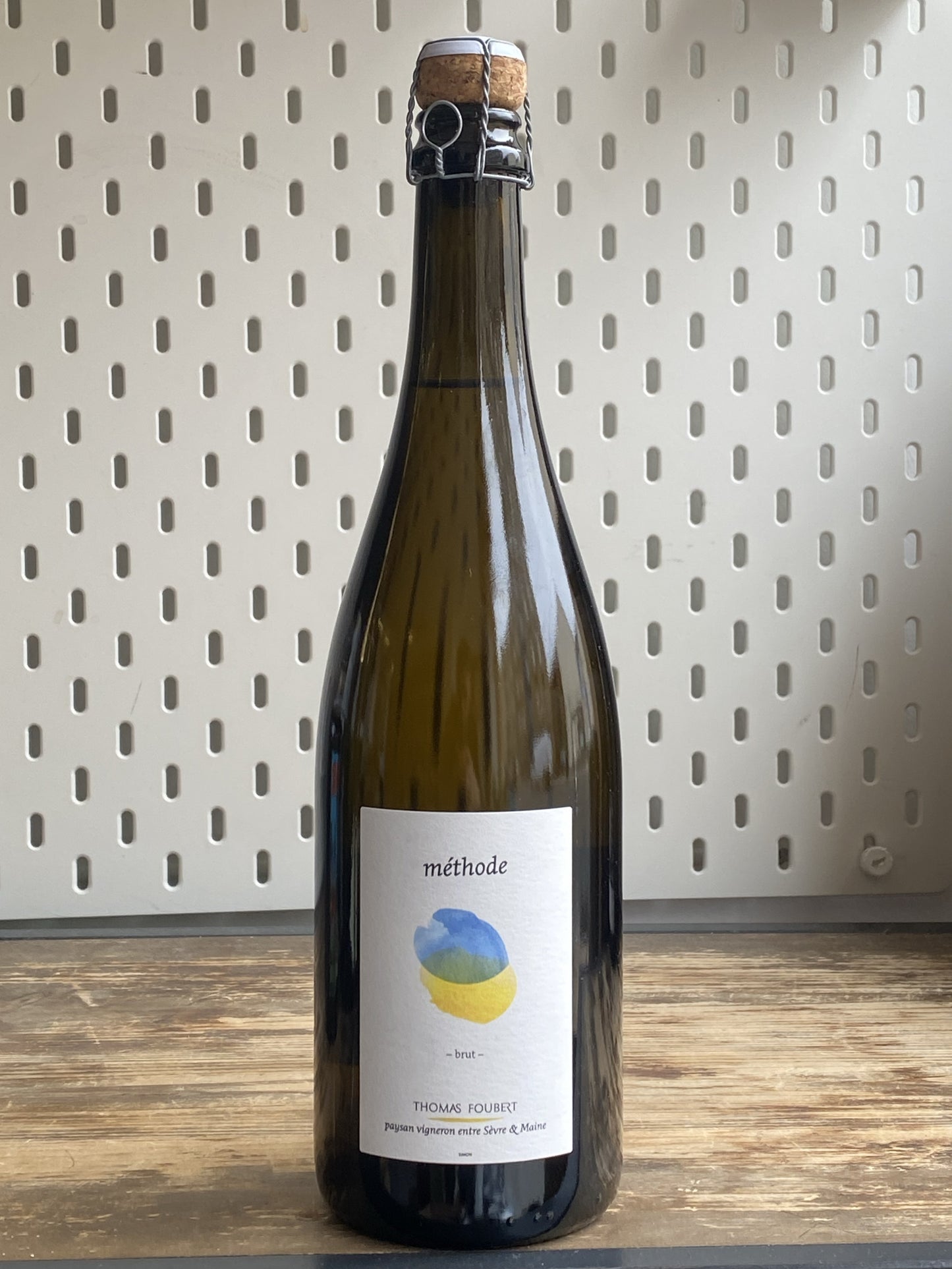
The range demonstrates Thomas's desire to work both within and beyond the traditional boundaries of Muscadet. Reflets, Gras Moutons and Pont-Caffino explore different expressions of Melon de Bourgogne from historic Muscadet sites, while wines such as Méthode, made from Chardonnay, and cuvées based on Côt and Egiodola allow him to explore varieties outside the classic Muscadet template. He also produces more experimental wines, including orange-style Chardonnay, reflecting his interest in diversification and alternative approaches to the vineyard and cellar. The result is a domaine that feels very much like a work in progress in the best possible sense: Thomas is taking the exceptional terroirs already present at Saint-Fiacre and gradually developing a broader range of wines around them.
What makes La Ferme des Confluences particularly exciting is that it represents a new generation of Muscadet, combining the region's exceptional granite and gneiss terroirs with a modern, ecological approach to farming and winemaking. Thomas is not attempting to reinvent Muscadet for the sake of it; the classic Melon de Bourgogne wines remain at the centre of the domaine, but he is interested in showing how much variation exists between individual sites while also giving himself freedom to experiment with other grapes and techniques. With roots in agriculture, experience working alongside respected Loire growers and a clear commitment to organic farming, Thomas Foubert is building a small, distinctive estate that places the soils and landscapes of Sèvre-et-Maine firmly at the centre of its wines.