Skip to product information
1 of 1

Bereta

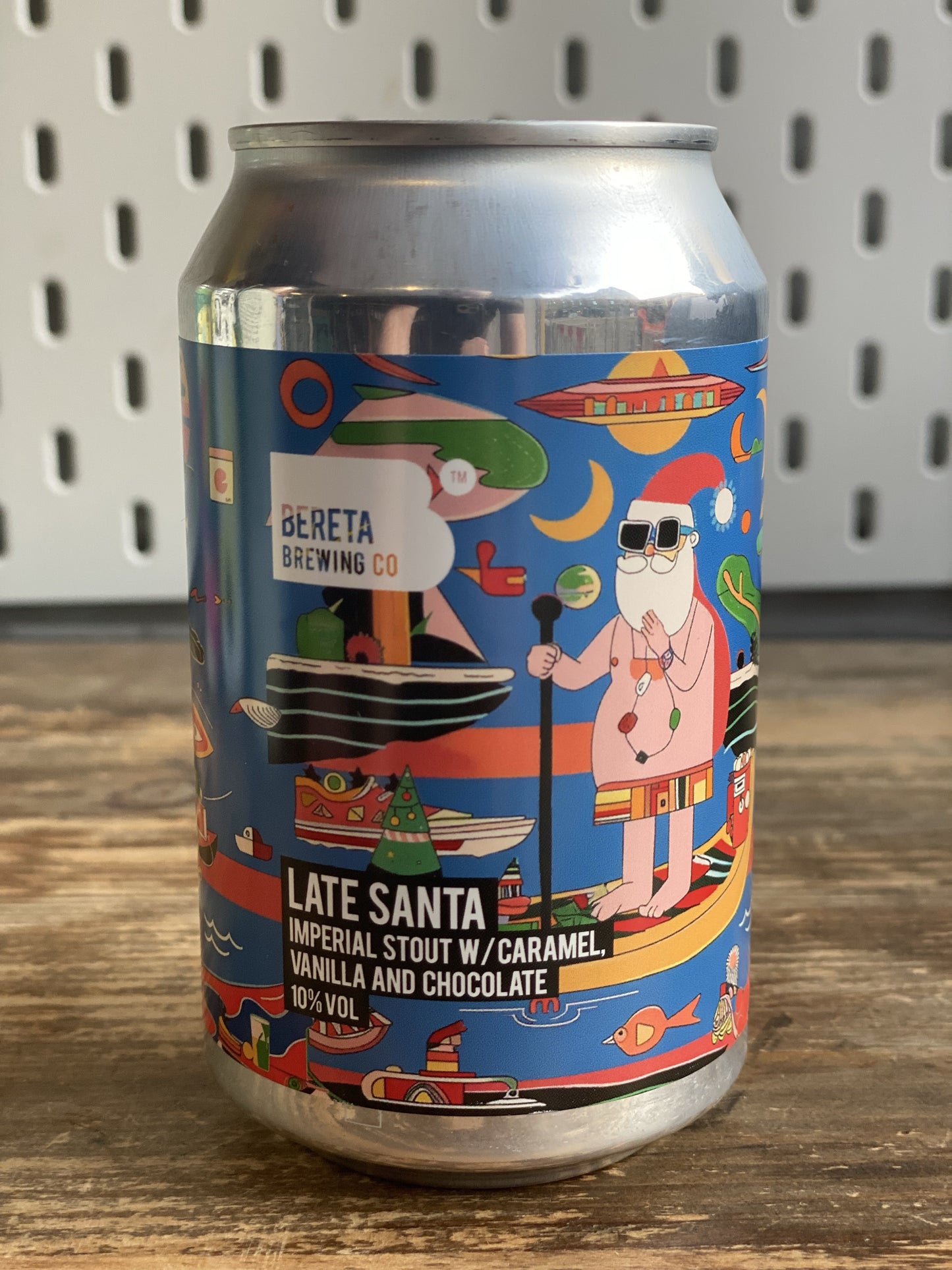
Bereta Late Santa

Bereta Late Santa

10%

Regular price £10.00
Regular price Sale price £10.00
Sale Sold out
Tax included. Shipping calculated at checkout.

Imperial Stout – Caramel, Vanilla & Chocolate

A rich and indulgent imperial stout layered with smooth caramel, silky vanilla, and decadent chocolate. Full-bodied and velvety, it delivers a perfect balance of sweetness and roasted malt depth. Luxurious, warming, and deeply satisfying — dessert in a glass.

Don’t forget your bottle opener!

Beerhive Waiter’s Friend

Tasting Notes

Fig Jam, Orange Peel, Winter Spice and Caramelised Sugar

Shipping & Returns

Delivery Days Monday- Wednesday- Friday

Order before 12 for same day delivery on these days

Order inside Edinburgh Bypass EH7 Free Delivery

Edinburgh minimum order £20

Free shipping for Courier Deliveries over £90 to UK Mainland

View full details

Bereta

Style: Brewery

Country: Romania

Region: Timiș County, Giarmata / Timișoara

Bereta Brewing is one of the breweries that helped put Romanian craft beer firmly on the European beer map. Starting out in Timișoara before eventually building their own brewery in nearby Giarmata, Bereta grew from a tiny homebrewing passion project into one of the most respected names in Eastern European craft beer. The whole story feels very modern craft beer in the best possible sense: friends obsessed with beer, endless experimentation, brewing in garages and contract facilities, then gradually evolving into a proper brewery with a fiercely loyal following and beers showing up in bottle shops all over Europe.

Founded officially in 2016 by Adrian Biebel and Silviu Burtă, Bereta initially operated as a gypsy brewery, producing beer through collaborations and rented brewing capacity before opening their own site a few years later. That nomadic beginning clearly shaped the brewery’s personality. There’s a constant sense of experimentation and movement running through the beers, but also a really strong technical understanding underneath all the creativity. They brew like people who genuinely love modern craft beer rather than simply trying to imitate trends from elsewhere.

The brewery became especially well known for hazy IPAs, heavily hopped pale ales and rich pastry stouts, styles that exploded globally during the late 2010s craft beer boom. Thankfully though, Bereta avoided becoming one-dimensional. Alongside the juicy hop bombs and dessert-like imperial stouts, they also produce crisp lagers, fruited sours and more experimental releases involving barrel ageing and mixed fermentation. The range moves constantly, but there’s usually a balance and polish to the beers that keeps them from drifting into complete gimmick territory. Even the bigger beers tend to stay surprisingly drinkable rather than feeling like a challenge somebody dared you to finish.

Part of Bereta’s appeal comes from the energy around the brewery itself too. Their taproom in Timișoara became one of the key meeting points for Romania’s growing craft beer scene, helping create a real community around modern independent beer in the region. It feels relaxed, social and heavily connected to the wider culture of craft beer rather than trying to present itself as some ultra-polished luxury brand. The brewery also collaborates constantly with other producers across Europe, which helped spread their reputation far beyond Romania surprisingly quickly.

What makes Bereta especially interesting is how naturally it reflects the wider rise of Eastern European craft beer. For years, countries like Romania were massively overlooked by the international beer scene despite having loads of talented brewers and rapidly growing local demand for modern styles. Bereta became part of that new wave proving the region could produce genuinely world-class craft beer capable of competing with breweries anywhere else in Europe. The beers regularly score highly online and the brewery has built a strong reputation among hop fans in particular, especially for their soft juicy New England style IPAs and huge triple IPAs.

There’s also something refreshingly enthusiastic about the whole project. The branding stays playful, the beers stay experimental and nothing feels overly corporate or carefully focus-grouped. It still feels like a brewery run by people excited about making beer rather than endlessly discussing “market positioning” in meeting rooms. Always a good sign.