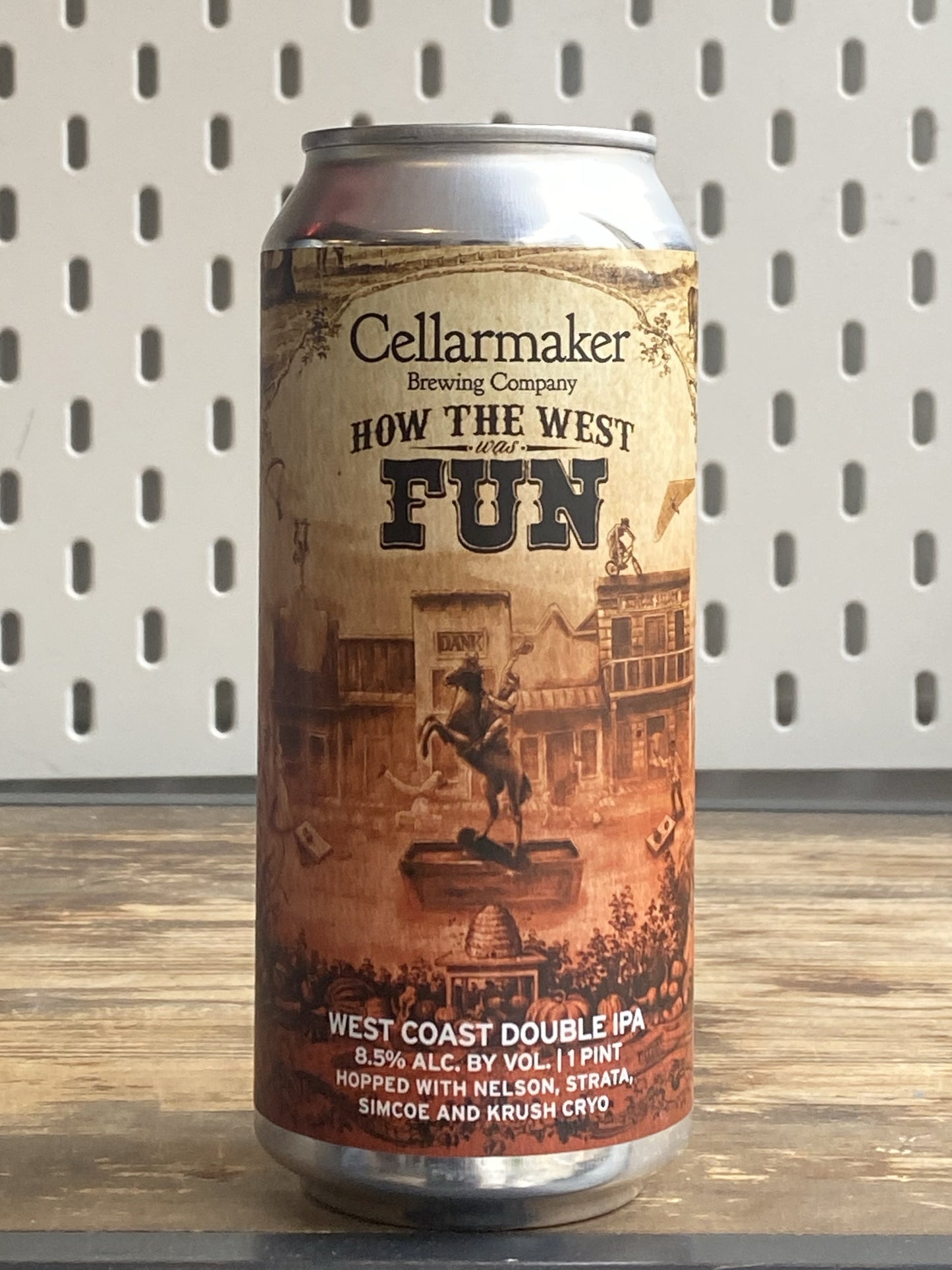
Cellarmaker Brewing Company was founded in 2013 in San Francisco's SoMa district by Connor Casey, Tim Sciascia and Kelly Caveney. The three founders had all worked in the Bay Area beer industry, including at Marin Brewing Company, before deciding to establish a brewery of their own. They opened with a deliberately small 10-barrel brewhouse and a simple idea: make fresh, distinctive beer in small batches and keep changing what they brewed. Rather than building a conventional brewery around a handful of permanent core beers, Cellarmaker set out to produce an ever-changing lineup, allowing the brewers to experiment constantly with different hops, yeasts, barrels and ingredients. That philosophy has remained at the heart of the brewery more than a decade later.
The name Cellarmaker reflects the brewery's belief that great beer is developed in the cellar as much as it is created on brew day. Fermentation, conditioning and ageing are treated as crucial parts of the process, giving the brewery freedom to work with everything from rapidly consumed fresh pale ales to beers that spend months or years developing in barrels. Tim Sciascia's brewing background was particularly influential here. Before Cellarmaker, he had worked at Samuel Adams and spent five years at Marin Brewing, while his approach to hops was influenced by the intense hopping and relatively restrained malt bills of breweries such as Russian River. Cellarmaker subsequently developed that influence into its own style, reducing perceived bitterness while pushing hop aroma, flavour and drinkability to the forefront.
Hoppy beer has consequently become one of Cellarmaker's defining strengths. The brewery works extensively with American and New Zealand hop varieties, producing everything from pale ales and West Coast IPAs to Double IPAs and hazy beers. Its archive demonstrates just how broad this exploration has become, with beers built around varieties including Citra, Mosaic, Nelson Sauvin, Strata, Motueka, Galaxy and many others. The brewery's current beers continue to move between West Coast IPA, hazy IPA, pale ale and pilsner, often using different hop combinations from one release to the next. Freshness is particularly important: Cellarmaker's own philosophy is centred around constantly producing new beers rather than maintaining a fixed production schedule, with new flavours appearing regularly across its Bay Area locations.
But reducing Cellarmaker to a hop brewery would miss a substantial part of what makes it interesting. From its earliest days the brewery has explored sour, mixed-fermentation, barrel-aged and experimental beers, alongside more traditional styles. Early releases included beers fermented with souring organisms, fruit additions and unusual ingredients, while the barrel programme has grown to encompass imperial stouts, barleywines, strong porters and other beers designed to develop over extended periods. One of its best-known experimental beers, Coffee & Cigarettes, combines lightly smoked German malt with English malts and a substantial quantity of Sightglass Coffee, producing a beer that sits somewhere between smoked porter and coffee stout. The brewery's archive now contains hundreds of beers, including barrel-aged barleywines, saisons, mixed-fermentation beers, fruited sours and a wide range of lagers and ales.
Cellarmaker has also grown considerably from its original SoMa home while retaining its small-batch, experimental character. It now has locations in San Francisco, Berkeley and Oakland, with the brewery's current spaces combining beer with food and a strong taproom culture. The expansion has allowed Cellarmaker to increase its brewing capacity and explore different areas of fermentation without abandoning the variety that made the brewery famous in the first place. Today, its output can jump from an intensely hopped West Coast IPA to a delicate pilsner, an experimental sour or a heavily barrel-aged barleywine, often within the same week. That constant movement is perhaps the defining feature of Cellarmaker: rather than trying to perfect a single house style, it treats brewing as an ongoing experiment, using the cellar, fresh hops, unusual ingredients and long-term ageing to continually explore what beer can be.