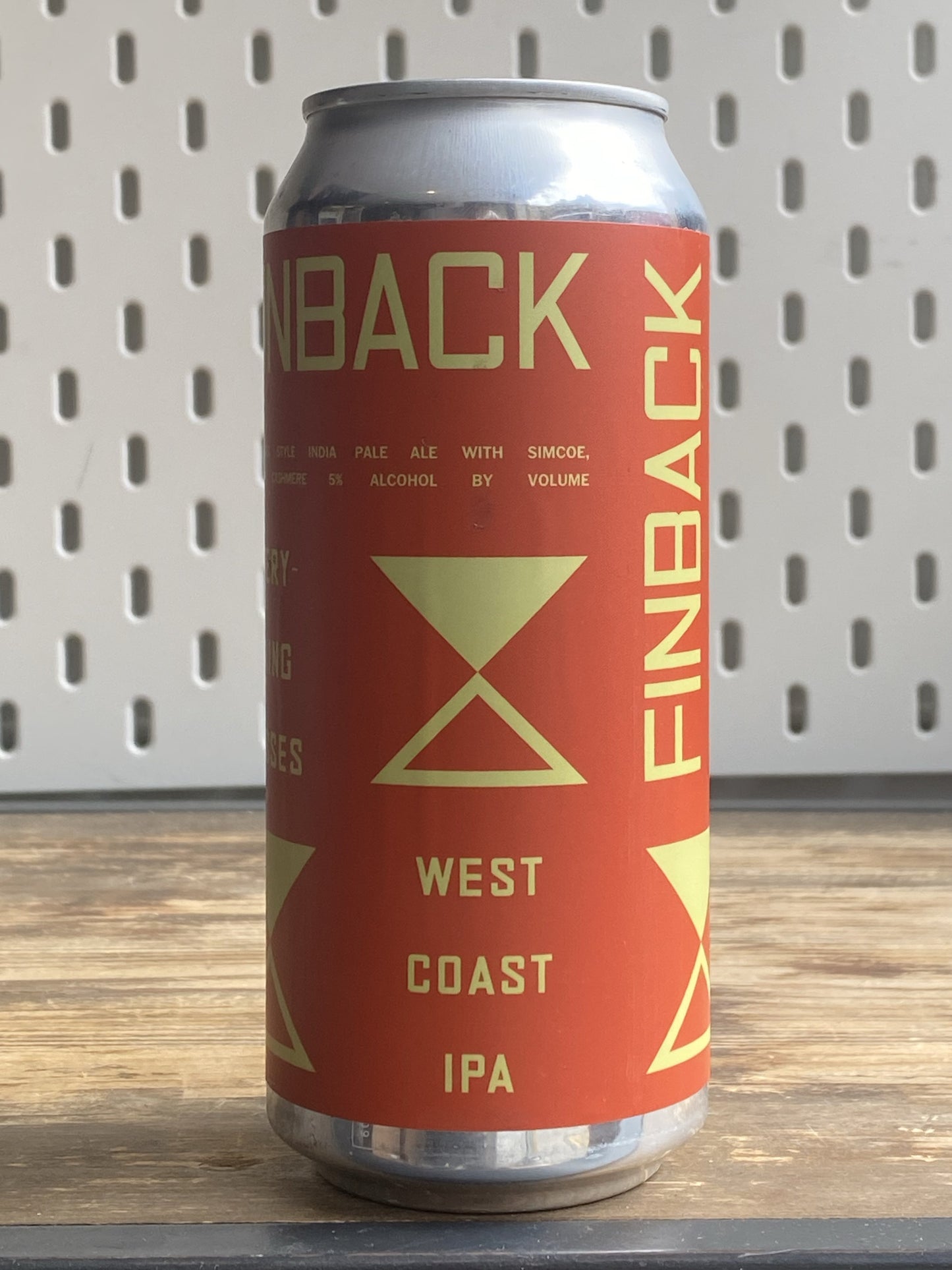
Finback Brewery was founded in 2014 by Basil Lee and Kevin Stafford, two friends who had spent years homebrewing before deciding to turn their obsession with beer into a proper brewery. Lee came from architecture and Stafford from graphic design, and those backgrounds have had a noticeable influence on Finback from the beginning. The brewery was originally intended to be called Narwhal, but trademark problems forced a rethink, eventually leading to the name Finback after a finback whale washed up on a beach in Queens while the pair were struggling to find a home for the brewery. They eventually found their space in Glendale, Queens, where the first Finback beers were brewed in January 2014.
From the start, Finback deliberately avoided defining itself around a single beer style. The first lineup included an IPA, a witbier and a smoked porter, which gives you a pretty good idea of the approach. Lee and Stafford came from homebrewing, where the temptation is generally to make something different every time, and they carried that curiosity into the commercial brewery. Over the years Finback has become particularly associated with hoppy beers, especially hazy and Double IPAs, but the brewery continues to move between styles, ingredients and techniques. Its current core range includes a crisp pilsner, hazy pale ale, modern West Coast IPA and hazy IPA, while the wider catalogue regularly stretches into imperial stouts, barrel-aged beers, mixed fermentation and more experimental territory.
Hops are a major part of Finback's identity, with the brewery constantly exploring different combinations of varieties, yeast and brewing techniques. Citra, Mosaic, Columbus, Simcoe, Nelson and a whole host of newer hop varieties appear throughout the range, but Finback isn't simply interested in piling hops into a beer and seeing what happens. The aim is generally for beers that are expressive but drinkable, with enough texture and intensity to be interesting without losing balance. That same attitude extends to ingredients beyond hops. Finback has experimented with fruit, coffee, cacao, spices, tea, honey and other adjuncts, sometimes using them in combinations that sound slightly mad on paper but make considerably more sense once you actually drink the beer.
The brewery's creative side is also unusually important to its identity. Lee and Stafford's design backgrounds have shaped everything from the taproom spaces to the strikingly clean, graphic artwork on the cans. Finback describes itself not simply as a brewery but as a platform for creative expression, something that has expanded into spirits, coffee, food and agriculture. Its three current spaces reflect that idea: the original Glendale factory remains the main production brewery and home to its barrel programme, the Brooklyn space operates as a smaller brewing and distilling studio, and the Long Island City site focuses particularly on mixed-culture fermentation, fruit-forward beers and other experimental projects.
There is a distinctly New York quality to Finback's approach: restless, collaborative and not particularly interested in standing still. The brewery grew alongside the new generation of NYC breweries that helped put the city firmly on the modern American beer map, but its own identity has always come from experimentation rather than trying to imitate whatever happens to be fashionable. Alongside the hop-heavy beers, Finback has developed a serious barrel-aged and mixed-fermentation programme, while its long-running BQE Coffee Stout has become something of an institution, with numerous variants and vintages exploring coffee, chocolate, vanilla, coconut and other additions. More than a decade in, Finback is still essentially doing what Lee and Stafford wanted to do when they started: treating brewing as a creative process, making lots of different things, and seeing how far they can push beer without forgetting that it ultimately has to be really good to drink.